Attribution · 9 min read
Tenjin vs AppsFlyer: an honest MMP comparison for indie developers
Tenjin vs AppsFlyer on 2026 list prices: free tiers, cost per conversion, SKAN, fraud protection, ad revenue and AI tools. Which MMP fits a small app, which fits a scaling team, and what each costs at 5,000 or 50,000 paid installs a month.
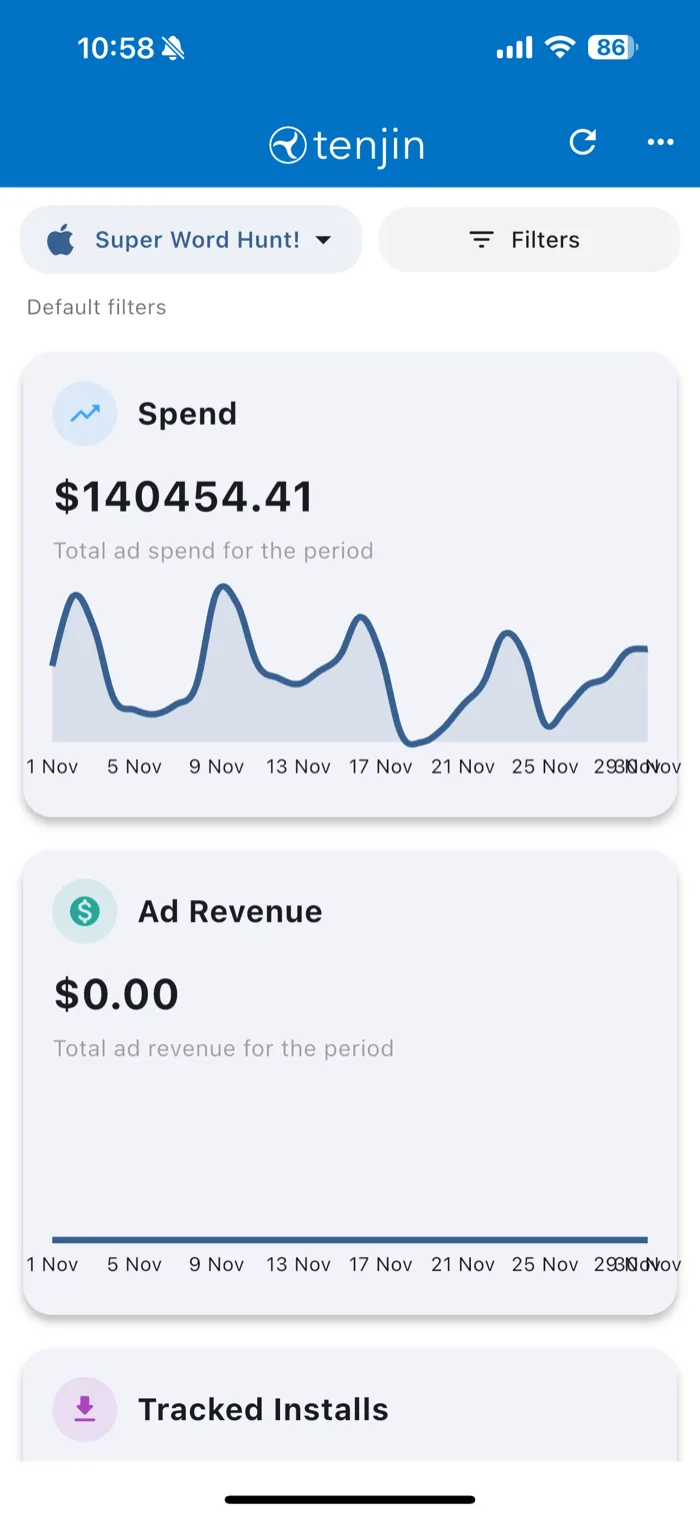
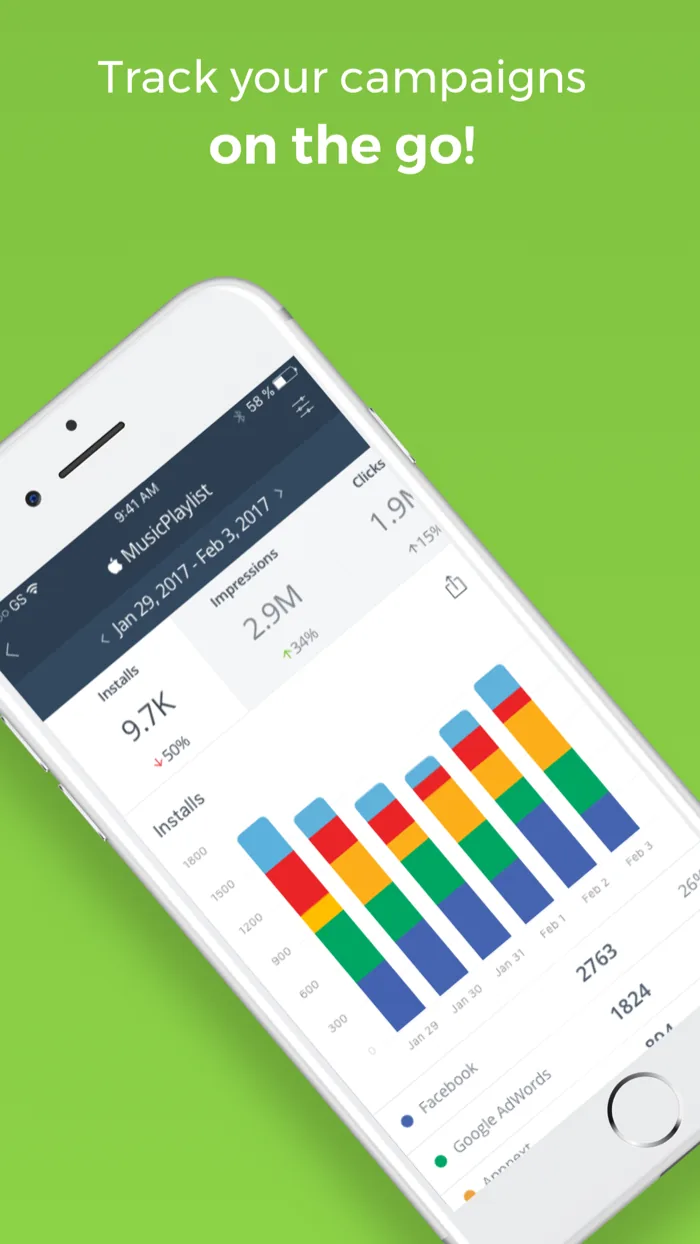
Tenjin and AppsFlyer are both Mobile Measurement Partners (MMPs): an SDK plus a dashboard that tells you which ad network, campaign and creative drove each install, and what those users are worth. They do the same core job. They're built for different stages of an app's life, and they price that difference very differently.
The short answer: Tenjin is the cheaper, simpler choice for a solo developer or a small studio buying its first paid traffic, especially if the app earns money from ads. AppsFlyer is the deeper platform you grow into when your spend, your team or your partners call for advanced fraud protection, audiences, deep linking and enterprise data tools. Both bill only for installs they attribute to paid campaigns: organic installs are free on both.
Tenjin vs AppsFlyer at a glance
| Tenjin | AppsFlyer | |
|---|---|---|
| Best for | Solo devs and small studios buying their first traffic; ad-monetized apps and games | Teams scaling spend across many channels, and companies that need enterprise data, fraud and deep-linking tools |
| Free plan | 2,000 attributed conversions a month, no time limit, no credit card | 12,000 free conversions to use within the first 12 months |
| After the free allowance | $0.04 per conversion on the free plan, or bundles from $200 a month for 10,000 | $0.07 per conversion on Growth, pay-as-you-go |
| Features by plan | Every feature on every plan, the free one included | Core attribution and analytics; API access, Protect360, Audiences and Data Locker are premium |
| Organic installs | Free, not counted | Free, not counted |
| Fraud protection | Fraud prevention and Site ID filters, included | ProtectLITE (basic) for every customer; Protect360 (advanced) is premium |
| Spend, ad revenue, ROAS | Cost aggregation, impression-level ad revenue, LTV and ROAS, included | Cost and revenue through ROI360; full cost data is a premium add-on |
| iOS privacy | SKAdNetwork 4, free for all customers | SKAdNetwork on every plan; documented AdAttributionKit features |
| AI tooling | MCP server with read and write access | MCP server (since July 2025), Agent Hub, AI Assistant |
| Commitment | Month to month; annual billing is cheaper | Pay-as-you-go on Growth; Enterprise on a custom contract |
Pricing: where the two really differ
Both companies charge per conversion. For Tenjin, a conversion is an install that follows an ad click. AppsFlyer also counts re-engagements and re-attributions driven by a campaign it measures. Neither charges for organic installs, which matters for an indie app: if most of your downloads come from App Store search, you only pay for the share you bought.
Tenjin publishes every tier (Tenjin pricing):
| Plan | Conversions / month | Monthly | Annual |
|---|---|---|---|
| Free | 2,000 | $0, then $0.04 per extra conversion | — |
| S | 10,000 | $200 | $2,000 |
| M | 25,000 | $400 | $4,000 |
| L | 50,000 | $700 | $7,000 |
| XL | 100,000 | $1,000 | $10,000 |
| Enterprise | Custom | Quote | Quote |
Paid tiers bill extra conversions at $0.03 or less, run month to month, and include every Tenjin product. So does the free plan: Tenjin's FAQ lists cost aggregation and ad revenue LTV among the features it includes.
AppsFlyer publishes one rate and three plans (AppsFlyer pricing):
- Zero (free): for owned media. AppsFlyer says it is not suitable for apps with paid activity.
- Growth (pay-as-you-go): 12,000 free conversions to use within the first 12 months, then $0.07 per conversion. Core analytics and SKAdNetwork support are included, along with a 30-day trial of raw data API access, the API analytics suite and custom dashboards.
- Enterprise (custom pricing): the full platform, premium features included (API access, Protect360 fraud protection, Audiences, Data Locker), on a negotiated contract.
What each one costs at your volume
List price for one month of paid installs, once the free allowances are used up. On AppsFlyer that means the 12,000 welcome conversions are spent or the first 12 months are over:
| Paid installs / month | Tenjin (cheapest plan) | AppsFlyer Growth |
|---|---|---|
| 1,000 | $0 (Free) | $70 |
| 5,000 | $120 (Free: 3,000 × $0.04) | $350 |
| 10,000 | $200 (S) | $700 |
| 25,000 | $400 (M) | $1,750 |
| 50,000 | $700 (L) | $3,500 |
| 100,000 | $1,000 (XL) | $7,000 |
On list prices, AppsFlyer Growth costs about 3 to 7 times what Tenjin costs at the same volume, and Tenjin's annual billing widens the gap further. Two caveats keep the comparison fair. AppsFlyer's year-one allowance is generous for a small app: at 1,000 paid installs a month, the 12,000 free conversions cover the whole first year, so you pay nothing on either platform. And nobody spending $7,000 a month on attribution stays on list prices: at that volume AppsFlyer moves you to an Enterprise contract and the rate per conversion drops. Ask both for a quote before trusting either end of this table.
Where AppsFlyer is stronger
- Ecosystem. AppsFlyer presents itself as the industry's number one measurement partner, and it's the MMP that ad networks, agencies and publishers are most likely to work with already. If a publishing deal or an agency is in your plans, ask which MMP they expect before you integrate one.
- Fraud. Every customer gets ProtectLITE, basic protection against install fraud. Protect360 adds the advanced detection suite on premium plans (AppsFlyer).
- Data and audiences. Data Locker delivers raw data to your own storage, Audiences segments users for retargeting, and a Data Clean Room joins your data with partners'. That's what a growth team with a data warehouse eventually asks for.
- Deep linking. AppsFlyer sells deep linking as a product of its own, so links that open the right screen, even right after the install, live in the same stack as your attribution.
- Apple's newer framework. AppsFlyer documents AdAttributionKit features such as overlapping re-engagement windows and conversion tags (AppsFlyer).
- AI tooling at scale. Its MCP server launched in July 2025, and AppsFlyer reports that the number of companies using it grew 12-fold in six months (AppsFlyer AI usage report).
Where Tenjin is stronger
- Price, in writing. Every tier is on the pricing page, and you don't talk to sales before Enterprise. At 10,000 paid installs a month the list price is $200, against $700 on AppsFlyer Growth.
- No feature gating. Free plan or XL, you get the same product. Nothing you need to compute ROAS sits behind an add-on.
- Ad-monetized apps. The SDK integrates impression-level ad revenue, and the dashboards put ad revenue, LTV and ROAS next to spend. Most of Tenjin's published case studies come from game studios. If ads pay your bills, that's the view you'll live in.
- DataVault. Tenjin's data warehouse gives you user-level data to query yourself, so you can go past the dashboard without building a pipeline first.
- An MCP server that can act. Beyond reading ROAS, LTV, retention, spend and attribution, Tenjin's MCP server can create, update or delete campaigns, apps, callbacks and Site ID filters from Claude, Codex or Cursor, with a dry run to preview changes (Tenjin). Tenjin says it was the first MMP to offer write access.
- Short commitment. Paid plans run month to month and you can cancel anytime.
The trade-offs the pricing pages leave out
Tenjin's limits. It's a far smaller company (it came out of Y Combinator in 2014), with a smaller partner ecosystem and fewer enterprise modules: nothing on its product list matches AppsFlyer's audience segmentation or data clean room. On iOS, its public SDK documentation (v1.20.1, October 2026) covers SKAdNetwork 4 conversion values and postbacks but doesn't mention AdAttributionKit. If Apple's re-engagement attribution matters to you, ask Tenjin before you sign.
AppsFlyer's limits. The free allowance runs out after the first year, the Zero plan can't measure paid campaigns, and raw data, advanced fraud protection and full cost data are paid extras. Past Growth, pricing is a conversation with sales.
Neutrality. An MMP is supposed to be the referee between ad networks. In June 2026, Google, Meta, Moloco and Unity took minority stakes in AppsFlyer in a round of more than $1 billion, valuing it at about $2.7 billion (Axios). AppsFlyer says the stakes are non-controlling and give the investors no preferential access to its data or attribution logic. Adjust customers have weighed a similar question since AppLovin bought Adjust in 2021. How much weight it deserves is your call, but it's worth knowing.
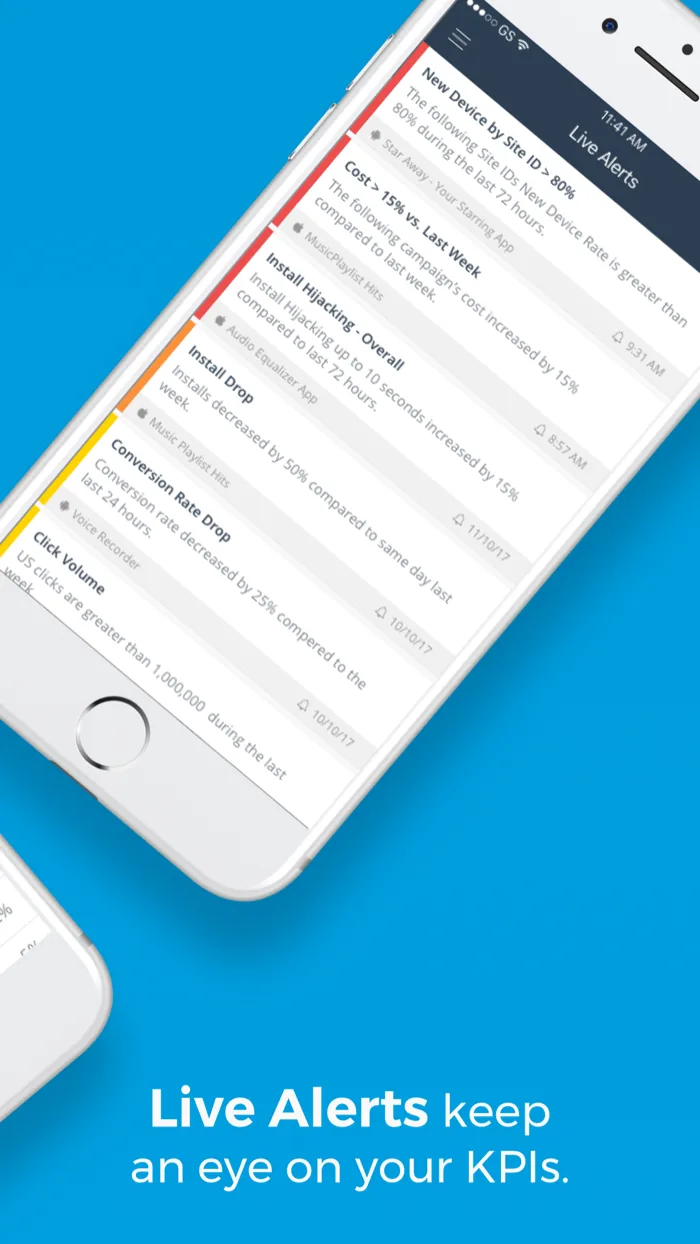
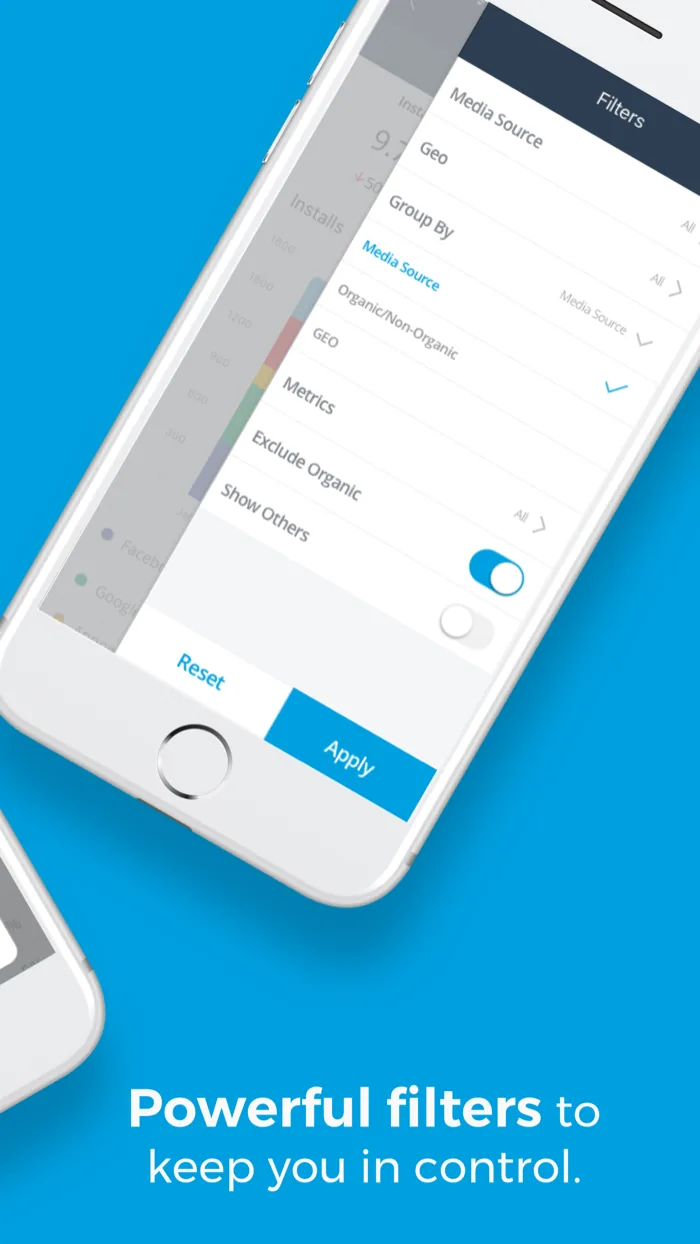
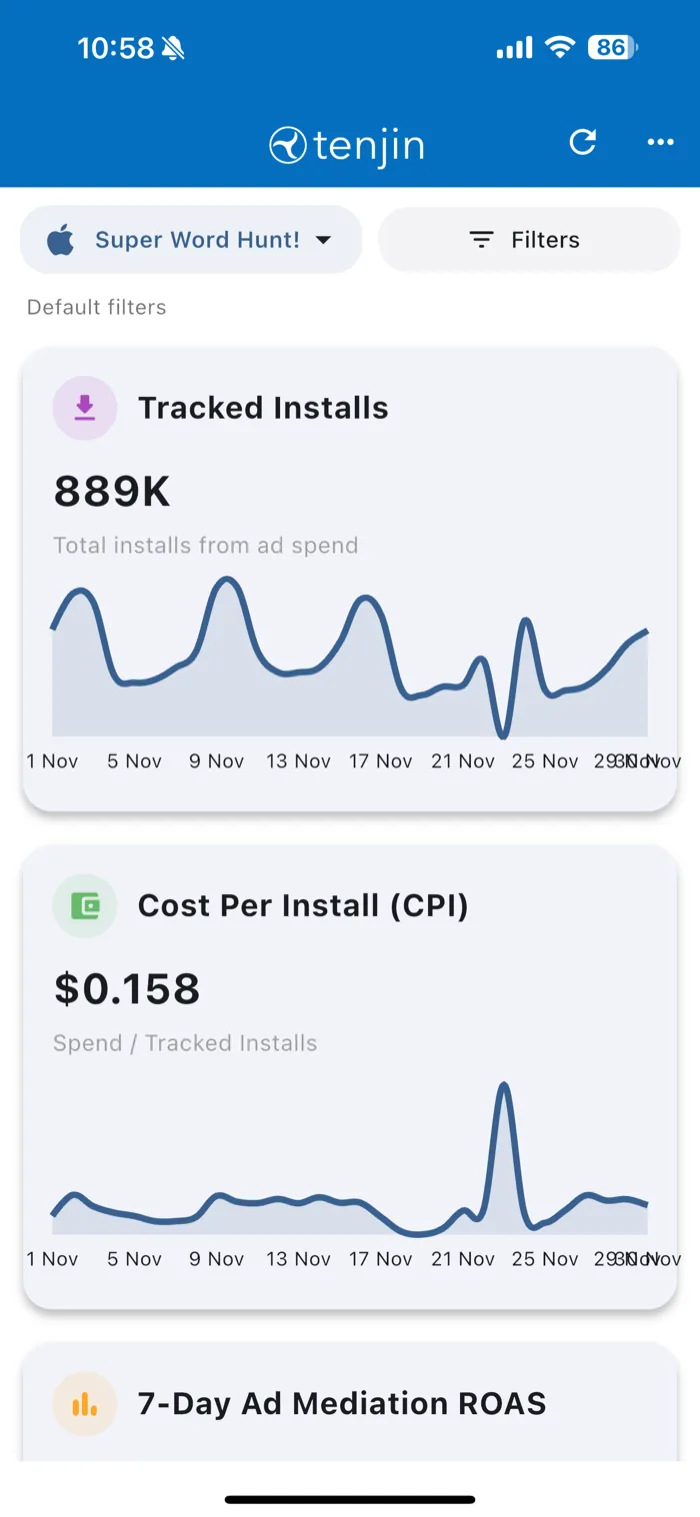
The companion apps shouldn't sway you either way. Both are built for checking numbers from your phone: the setup, the deeper reports and the decisions happen in the web dashboards.
Which one should you choose?
- 1No paid campaigns yet? Neither. An MMP measures paid traffic; without any, you'd spend setup time on an empty dashboard. Put that time into organic first, starting with App Store keyword research.
- 2First campaigns, a few thousand paid installs a month, ads as a revenue source: Tenjin. The free plan covers 2,000 paid installs a month with no end date, and everything you need for ROAS is included.
- 3A year of small-scale UA tests: both work. AppsFlyer's 12,000 free conversions cover about 1,000 paid installs a month for twelve months; budget $0.07 each after that.
- 4A publisher, agency or investor expects AppsFlyer, or you need Protect360, audiences, deep linking or a clean room: AppsFlyer. Price the premium features you'll actually use before you sign.
- 5Past 50,000 paid installs a month: get quotes from both. At that volume, list prices stop meaning much.
Whichever you pick, integrate it before your first campaign and send your real revenue events from day one. Switching later means a new SDK, new tracking links on every network, and attribution history that stays behind in the old tool. If you do switch, run both SDKs side by side for a few weeks and compare their counts before you cut over.
What neither MMP shows you
Both dashboards file every install they can't attribute under organic, and stop there. Yet paid bursts move your organic rankings: a campaign that lifts you in the charts also strengthens your keyword positions, and those positions bring free installs that no MMP credits to the campaign. We covered that effect in which MMP an indie developer should use.
Seeing it takes keyword ranks tracked daily and lined up against your campaign dates. That's what AppCompete's Rank Tracker does, next to whichever MMP you run.
FAQ
Is Tenjin cheaper than AppsFlyer?
On list prices, yes. Tenjin's free plan covers 2,000 paid installs a month with no time limit, and its paid tiers start at $200 a month for 10,000 conversions. AppsFlyer's Growth plan charges $0.07 per conversion once the 12,000 free conversions of the first year are used, so 10,000 paid installs cost $700 a month. Enterprise contracts are negotiated on both sides.
Does AppsFlyer have a free plan?
Yes. The Zero plan is free, but it's meant for owned media: AppsFlyer says it isn't suitable for apps with paid campaigns. Both the Zero and Growth plans start with a Welcome Package of 12,000 free conversions to use within the first 12 months.
Do Tenjin and AppsFlyer charge for organic installs?
No. Both count only conversions they attribute to a campaign. Organic installs, such as those coming from App Store search, are free and unlimited on both platforms.
Is Tenjin enough for a small app or game?
For most indie teams, yes. Every plan, the free one included, covers attribution, cost aggregation, ad revenue, LTV, ROAS, SKAdNetwork and fraud filtering. Teams that need audience segmentation, a data clean room or a dedicated deep-linking product will find those at AppsFlyer.
Can I switch from AppsFlyer to Tenjin, or the other way around?
Yes, but plan it. You replace the SDK, recreate your tracking links and network integrations, and your attribution history stays in the old tool. Running both SDKs in parallel for a few weeks lets you compare their numbers before you cut over.